


31 August, 2026
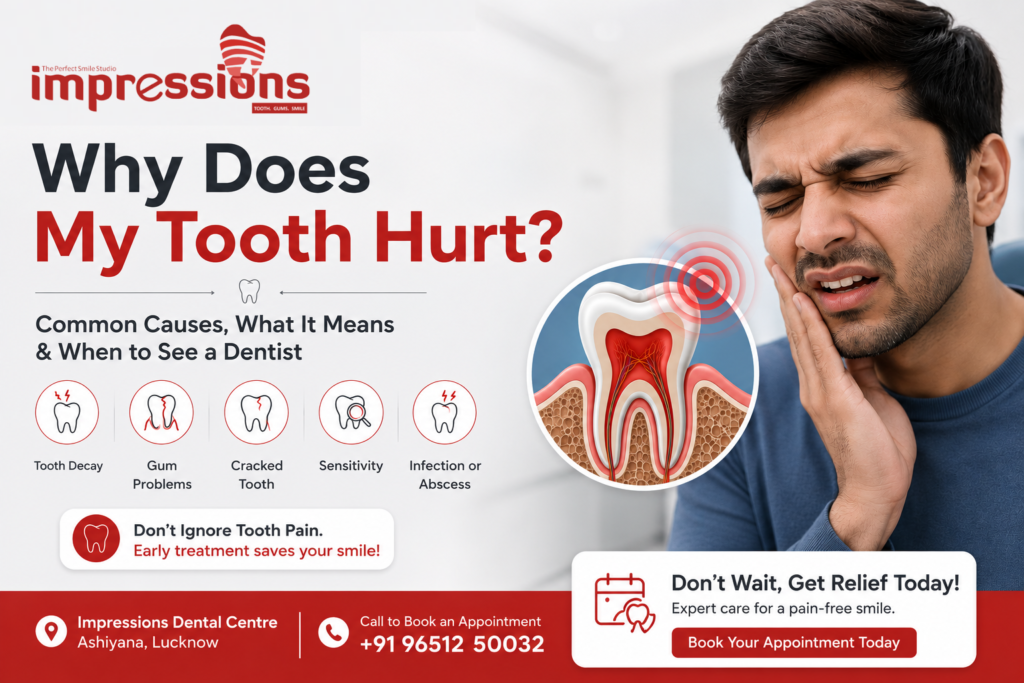
Why Does My Tooth Hurt? Common Causes, What It Means & When to See a Dentist
Have you ever taken a sip of cold water and suddenly felt a sharp jolt in one tooth? Or perhaps a tooth starts throbbing when you lie down at night, hurts when you chew, or becomes painful whenever you eat something sweet.
If you’re wondering, “Why does my tooth hurt?”, you’re not alone. Tooth pain is one of the most common reasons people seek dental care.
The important thing to understand is that tooth pain is a symptom, not a diagnosis. A toothache can be caused by something relatively minor, such as temporary sensitivity, or by a deeper problem such as tooth decay, inflammation of the dental pulp, a cracked tooth, or an infection.
The pattern of your pain when it happens, what triggers it, how long it lasts, and whether there is swelling can provide useful clues. However, these symptoms cannot reliably tell you exactly what is wrong. A proper dental examination is often needed to identify the cause and decide whether you need a filling, sensitivity treatment, root canal treatment, gum care, restoration, extraction, or simply monitoring.
Why Does My Tooth Hurt?
The most common causes of tooth pain include tooth decay, sensitivity, cracked or damaged teeth, inflammation or infection inside the tooth, gum problems, dental abscesses, wisdom tooth problems, damaged fillings or crowns, teeth grinding, and dental trauma.
Some common causes include:
- Tooth decay or cavities that have reached deeper layers of the tooth
- Tooth sensitivity caused by exposed dentin, gum recession, or enamel wear
- Cracked or broken teeth, which may hurt particularly when biting
- Inflammation of the tooth pulp, often associated with deep decay or trauma
- Tooth infection or a dental abscess
- Gum inflammation or infection
- Wisdom tooth problems, particularly when a tooth is impacted or partly erupted
- Problems with fillings, crowns, or other dental restorations
- Teeth grinding or clenching, which can overload teeth and jaw muscles
- Injury or trauma to a tooth
The same type of pain can sometimes occur with different dental conditions, so it is best not to assume that a toothache automatically means you have a cavity or need a root canal.
Common Types of Tooth Pain and What They May Mean
The way a tooth hurts can provide clues, but the following are possible causes rather than definitive diagnoses.
| What the pain feels like
|
Possible causes | What you should do |
| Sharp pain with cold
|
Sensitivity, decay, exposed dentin | Get a dental evaluation if it persists or worsens |
| Pain when biting
|
Cracked tooth, decay, inflammation, restoration problem | Arrange a dental examination |
| Throbbing pain
|
Deep decay, pulp inflammation, infection | Seek dental care promptly |
| Pain at night
|
Pulp inflammation, infection, increased awareness of pain | Arrange a dental evaluation, especially if persistent |
| Pain with sweets
|
Tooth decay, exposed dentin | Have the tooth checked |
| Constant pain
|
Significant inflammation or infection | Arrange prompt dental care |
| Pain with swelling
|
Possible infection or abscess | Seek urgent dental assessment |
A dentist may need to examine the tooth, check your bite, test its response to different stimuli, and sometimes take an X-ray before determining the cause.
10 Common Reasons Your Tooth May Hurt
1. Tooth Decay and Cavities
A cavity does not necessarily hurt when it first develops. Early tooth decay may cause no noticeable symptoms at all.
As decay progresses through the outer enamel and into the underlying dentin, you may begin to experience sensitivity or pain, particularly with cold drinks, sweets, or certain foods. If decay reaches the deeper pulp of the tooth, pain can become more persistent or severe.
Treatment depends on how far the decay has progressed. A suitable cavity may be treated with a filling. If the pulp has become irreversibly inflamed or infected and the tooth can be saved, root canal treatment may be considered.
Leaving a painful cavity untreated can allow the problem to become more complicated.
2. Tooth Sensitivity
If your tooth hurts when you drink cold water or eat something hot or sweet, sensitivity may be one possible explanation.
Sensitivity can occur when dentin becomes exposed because of:
- Gum recession
- Enamel wear
- Aggressive brushing
- Tooth erosion
- Certain dental conditions
Typical sensitivity is often a brief, sharp sensation that disappears soon after the trigger is removed.
However, pain that lingers, occurs spontaneously, or is becoming more frequent should not simply be assumed to be ordinary sensitivity. A dental examination can help determine whether there is another underlying problem.
3. Cracked or Broken Tooth
A cracked tooth can cause surprisingly specific symptoms. You may feel pain when biting down, particularly on certain foods, or sometimes when releasing your bite.
Not every crack is obvious when you look in the mirror. Some cracks are difficult to see and may require a careful clinical examination.
Treatment depends on the location and severity of the damage. A restoration or crown may sometimes be appropriate, while a severely damaged tooth may require a different approach.
If you suspect a cracked tooth, avoid repeatedly biting hard foods to “test” it. That can put additional stress on the tooth.
4. Tooth Pulp Inflammation
Inside every healthy tooth is a living tissue called the pulp, which contains nerves and blood vessels.
Deep decay, repeated dental procedures, cracks, or trauma can irritate this tissue. When inflammation becomes severe or irreversible, the tooth may become painful without an obvious external trigger.
You may notice:
- Spontaneous pain
- Lingering pain after hot or cold foods
- Throbbing discomfort
- Pain that interferes with sleep
When the pulp is irreversibly inflamed or infected, root canal treatment may be recommended if the tooth is suitable for saving.
Not every painful tooth requires RCT. The diagnosis matters.
5. Tooth Infection or Dental Abscess
A dental infection can develop when bacteria reach the deeper tissues of a tooth or surrounding structures.
Possible warning signs include:
- Persistent or severe tooth pain
- Swelling around the tooth or face
- Tenderness
- A bad taste or discharge
- Pus
- Fever
- Difficulty opening the mouth in some cases
A dental abscess requires professional assessment. Home remedies may temporarily reduce discomfort, but they do not remove the underlying source of infection.
If swelling is significant or is accompanied by difficulty breathing or swallowing, seek emergency medical attention immediately.
6. Gum Disease
Tooth pain isn’t always caused by the tooth itself.
Inflamed or infected gums can cause tenderness, bleeding, swelling, bad breath, or discomfort around one or more teeth. More advanced gum disease can affect the tissues supporting the teeth and may contribute to sensitivity or discomfort.
If your gums are regularly bleeding, swollen, tender, or pulling away from your teeth, don’t ignore these signs.
7. Wisdom Tooth Problems
Wisdom teeth can cause pain when they do not have enough room to erupt properly.
A wisdom tooth may become impacted or only partially emerge through the gum. Food and bacteria can collect around the area, causing inflammation or infection.
You may experience:
- Pain at the back of the mouth
- Swollen gums
- Difficulty opening the mouth
- Bad taste or bad breath
- Pain while chewing
Depending on the position and condition of the wisdom tooth, treatment may involve cleaning and managing the inflammation, monitoring it, or removing the tooth when extraction is clinically indicated.
8. Problems With an Existing Filling, Crown, or Restoration
A tooth that was treated in the past can become painful again.
For example, a filling may become worn or damaged, a crown may develop a problem, or decay may develop around an existing restoration. Occasionally, the tooth’s nerve may also develop inflammation after previous treatment.
If an old filling or crown becomes painful particularly if you develop pain when biting have it examined rather than assuming the restoration simply needs replacing.
9. Teeth Grinding or Clenching
Some people clench or grind their teeth, particularly during sleep or periods of stress, without realizing it.
Repeated excessive pressure can contribute to:
- Tooth tenderness
- Worn enamel
- Cracks or fractures
- Jaw discomfort
- Morning headaches
If several teeth feel sore rather than one clearly identifiable tooth, or you frequently wake with jaw tightness, tell your dentist.
10. Dental Injury or Trauma
A blow to the mouth during sports, an accident, or a fall can damage a tooth even when there is no obvious fracture.
A tooth may become painful, loose, sensitive, or discolored after an injury.
Dental trauma should be assessed promptly because damage to the tooth’s internal tissues may not always be visible from the outside.
If a permanent tooth is knocked out, seek urgent dental care immediately. Handle the tooth carefully and avoid touching the root.
Why Does My Tooth Hurt When I Eat or Drink Something Cold?
Cold sensitivity is extremely common, but its cause can vary.
A brief, sharp sensation that disappears quickly may occur with exposed dentin, gum recession, enamel wear, or certain cavities.
On the other hand, pain that continues or lingers after the cold stimulus is removed may indicate deeper irritation of the tooth.
Pay attention to the pattern:
- Brief pain: may be associated with sensitivity or exposed dentin.
- Lingering pain: may warrant evaluation for deeper inflammation or decay.
- Severe or spontaneous pain: should be professionally assessed rather than treated as ordinary sensitivity.
If cold water consistently causes pain in one particular tooth, a dentist can determine whether sensitivity, decay, a crack, or another problem is responsible.
Why Does My Tooth Hurt When I Bite or Chew?
Pain when biting is worth paying attention to, especially when it repeatedly occurs in the same tooth.
Possible causes include:
- A cracked tooth
- Deep decay
- Inflammation of the tooth pulp
- Infection
- A filling or crown that is interfering with your bite
- Problems involving the gum or supporting tissues
Don’t repeatedly bite hard objects or food on the painful tooth to test whether it still hurts. Until you can have it examined, chewing on the opposite side and choosing softer foods may be more comfortable.
Why Does My Tooth Hurt More at Night?
Tooth pain can feel worse at night, but nighttime pain does not automatically mean that you have an infection.
If a tooth has significant inflammation, you may notice the discomfort more when you are resting. When you’re lying down without daytime distractions, pain can also become much more noticeable.
Possible causes include pulp inflammation, decay, infection, or another underlying dental problem.
If tooth pain is repeatedly waking you up, preventing you from sleeping, or becoming progressively stronger, arrange a dental evaluation rather than relying on temporary pain relief.
Can Tooth Pain Go Away on Its Own?
Sometimes the pain disappears, but that does not necessarily mean the underlying dental problem has healed.
Dental pain can fluctuate. A cavity may hurt for a while and then become quiet. A damaged tooth may only hurt when you bite in a particular way. In some situations, symptoms can change even though the underlying problem remains.
This is particularly important when the pain disappears after being severe. Do not assume that “no pain” means “no problem.”
If tooth pain has been recurring, has lasted more than a day or two, or has been associated with swelling or other symptoms, it is sensible to have the tooth checked.
What Can I Do for Tooth Pain at Home?
If you cannot see a dentist immediately, there are several simple measures that may provide temporary comfort.
You can:
- Brush gently and keep the area clean.
- Rinse gently with warm salt water when appropriate.
- Avoid foods and drinks that trigger your pain.
- Avoid extremely hot, cold, sweet, or hard foods if they make the pain worse.
- Chew on the opposite side of your mouth.
- Consider an appropriate over-the-counter pain reliever according to its label and your individual medical suitability.
These steps are temporary comfort measures, not a substitute for dental treatment.
Do not place aspirin directly on a tooth or gum. Avoid applying alcohol, chemicals, essential oils, or other substances directly to the painful area, as they can irritate or damage oral tissues.
If the pain is caused by decay, infection, a crack, or pulp inflammation, home care cannot correct the underlying problem.
When Should You See a Dentist for Tooth Pain?
You should arrange a dental examination if:
- Tooth pain lasts more than a day or two.
- Pain keeps returning.
- Pain interferes with eating or sleeping.
- Cold, hot, or sweet sensitivity persists.
- A tooth hurts when you bite.
- You have a cracked or broken tooth.
- Your gums or face are swollen.
- You notice a bad taste or discharge.
- A tooth has become noticeably dark or discolored.
- An existing filling, crown, or other dental restoration becomes painful.
Getting the problem assessed early can sometimes allow treatment to be simpler and more conservative.
When Is Tooth Pain a Dental Emergency?
Some dental symptoms require urgent attention.
Seek urgent professional care if you have:
- Significant facial swelling
- Significant swelling around the mouth or jaw
- Fever together with dental symptoms
- Severe or uncontrolled tooth pain
- Swelling extending toward the eye or neck
- A knocked-out permanent tooth
- Significant facial or dental trauma
Difficulty breathing or swallowing is an emergency.
If dental swelling is affecting your breathing or swallowing, do not wait for a routine dental appointment. Seek immediate emergency medical attention.
A serious dental infection can sometimes spread beyond the immediate area of the tooth, so significant swelling and systemic symptoms should never be ignored.
How Does a Dentist Find the Cause of Tooth Pain?
When you visit a dentist for a toothache, the first step is understanding your symptoms.
Your dentist may ask:
- When did the pain begin?
- Is it sudden or gradual?
- What triggers it?
- Does cold or heat cause pain?
- Does the pain disappear quickly or linger?
- Does it hurt when you bite?
- Is the pain worse at night?
- Have you experienced an injury?
- Have you had a filling, crown, or other treatment on the tooth?
The dentist may then examine your teeth and gums, assess your bite, perform appropriate diagnostic tests, and take dental X-rays when clinically indicated.
The goal is not simply to identify where it hurts, but to understand why it hurts.
What Treatment Might Be Needed for Tooth Pain?
There is no single treatment for tooth pain because treatment depends on its cause.
Depending on the diagnosis, treatment may include:
- Dental filling: for suitable cavities.
- Sensitivity management: when sensitivity is the underlying problem.
- Root canal treatment: when the pulp is irreversibly inflamed or infected and the tooth is suitable for saving.
- Crown or other restoration: for certain damaged or weakened teeth.
- Gum treatment: when gum disease or infection contributes to symptoms.
- Wisdom tooth treatment or extraction: when a wisdom tooth is causing a problem and removal is indicated.
- Tooth extraction: when a tooth cannot reasonably be restored or saved.
A dentist should determine the appropriate treatment after examining the tooth rather than choosing treatment based only on the symptom.
Tooth Pain Does Not Always Mean You Need a Root Canal
One of the most common concerns patients have is:
“Does tooth pain mean I need an RCT?”
No.
Some tooth pain is caused by sensitivity, early or moderate decay, gum problems, a restoration issue, or other conditions that may not require root canal treatment.
Root canal treatment is considered when the tooth’s pulp has become irreversibly inflamed or infected and the tooth is otherwise suitable for saving.
That is why a proper examination is important. The presence of pain alone does not determine whether you need RCT.
How to Prevent Tooth Pain
While not every dental problem can be prevented, good everyday habits can significantly reduce the likelihood of many common causes of toothache.
Helpful habits include:
- Brush twice a day with fluoride toothpaste.
- Clean between your teeth regularly.
- Limit frequent sugary snacks and drinks.
- Have dental problems checked before they become painful.
- Don’t ignore recurring sensitivity.
- Attend regular dental checkups as recommended.
- Protect your teeth during appropriate contact sports.
- Discuss persistent teeth grinding or clenching with your dentist.
- Maintain good gum health.
A small cavity or early gum problem may be easier to manage before it develops into a painful dental emergency.
Frequently Asked Questions About Tooth Pain
1. Why does my tooth hurt suddenly?
Sudden tooth pain can have several causes, including a cavity, cracked tooth, pulp inflammation, sensitivity, infection, or dental trauma. A sudden onset does not identify the cause by itself, so persistent or severe pain should be assessed by a dentist.
2. Why does my tooth hurt when I drink cold water?
Cold water can trigger pain when dentin is exposed, gums have receded, or a tooth has decay or another underlying problem. Brief sensitivity may be relatively minor, but lingering or severe cold pain should be evaluated.
3. Why does my tooth hurt when I bite down?
Pain when biting can occur with a cracked tooth, deep decay, inflammation, infection, a problematic filling or crown, or issues involving the supporting tissues. A dental examination can help identify the cause.
4. Why does my tooth hurt at night?
Pain may become more noticeable at night because of underlying inflammation, infection, or simply increased awareness when you are resting. Repeated nighttime tooth pain should not be ignored.
5. Can a cavity cause severe tooth pain?
Yes. A cavity may initially cause little or no discomfort, but as decay progresses deeper into the tooth, it can cause significant sensitivity or pain. Deep decay can eventually affect the pulp.
6. Can tooth pain go away without treatment?
The symptoms can sometimes temporarily disappear, but this does not necessarily mean the underlying problem has healed. Recurring or persistent pain should be evaluated.
7. Does tooth pain always mean I need a root canal?
No. Root canal treatment is only appropriate for certain conditions involving the tooth’s pulp. Sensitivity, some cavities, gum problems, and other causes of tooth pain may require different treatment.
8. How long should I wait before seeing a dentist for tooth pain?
If pain persists for more than a day or two, keeps returning, affects eating or sleep, or is accompanied by swelling or other concerning symptoms, arrange a dental examination rather than continuing to wait.
9. What can I do for tooth pain until I see a dentist?
Keep the area clean, gently rinse with warm salt water when appropriate, avoid known triggers, chew on the opposite side, and consider an appropriate over-the-counter pain reliever according to its label and your personal medical suitability. These measures do not treat the underlying cause.
10. Why does my tooth hurt even though I cannot see a cavity?
Some dental problems are not visible when you look in a mirror. Cracks, early decay between teeth, pulp inflammation, gum problems, and issues beneath existing restorations may require a professional examination and sometimes an X-ray.
11. Can a cracked tooth cause pain?
Yes. A cracked tooth can cause sharp or inconsistent pain, particularly during biting or chewing. Some cracks are difficult to see, so recurring biting pain should be checked.
12. When should tooth pain be treated as an emergency?
Significant facial swelling, swelling toward the eye or neck, fever with dental symptoms, severe uncontrolled pain, major facial trauma, or a knocked-out permanent tooth require urgent attention. If swelling causes difficulty breathing or swallowing, seek immediate emergency medical care.
Experiencing Tooth Pain in Ashiyana, Lucknow?
If you’re dealing with persistent, recurring, or severe tooth pain, it is better to find the cause than repeatedly manage the symptom at home.
At Impressions Dental Centre, patients in Ashiyana and surrounding areas can have tooth pain evaluated to determine the underlying dental problem and the appropriate treatment.
Impressions Dental Centre
K-886, Sector K, Ashiyana, Lucknow – 226012
Phone: +91-99353-59438
If your tooth pain is persistent, keeps returning, or is affecting your sleep or eating, schedule a dental consultation to find out what is causing it and what treatment is appropriate.
Recent Post
Why Does My Tooth Hurt? Common Causes, What It Means & When to See a Dentist
31 August, 2026
Have you ever taken a sip of cold water and suddenly felt…

About Us
It is a long established fact that a reader will be distracted by the readable content of a page.
read more